






1.png)

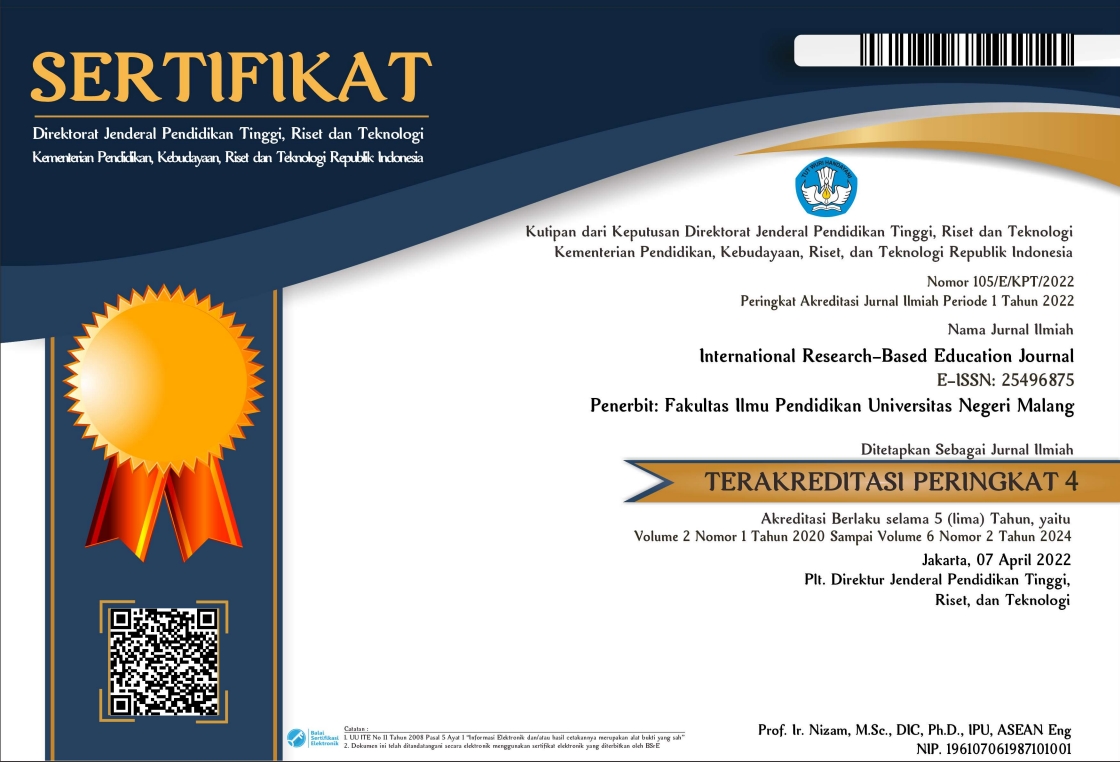
Teaching English As A Foreign Language: A Portrait Of Primary English Teaching In Kupang
Abstract
Keywords
Full Text:
PDFReferences
Alwasilah, A. C. (2000). Perspektif pendidikan bahasa inggris di Indonesia: Dalam konteks persaingan global.Bandung: Andira.
. (2002). Pokoknya kualitatif: Dasar-dasar merancang dan melakukan penelitian kualitatif. Bandung: Pustaka Jaya
Arikunto, S. 1990. Manajemen pengajaran secara manusiawi. Jakarta: PT. Rineka Cipta.
Brown, H. D. 2001. Teaching by Principles: an Interactive Approach to Language Pedagogy (2nd edition). New York: Pearson Education Company.
Carter, R. & Nunan, D. 2001. The cambridge guide to teaching english to speakers of other languages. New York: Cambridge University Press.
Djamarah, S.B & Zain, A. 2002. Strategi belajar mengajar. Jakarta: PT. Rineka Cipta
Harmer, J. 2002. The Practice of English Language Teaching (3rd Edition).England : Longman
Huda, N. 1999. Language Learning and Teaching. Issues and Trends. IKIP Malang Publisher.
Hudelson, S. 1991. EFL Teaching and Children: A Topic-Based Approach. English Teaching Forum. 29, 2-40.
Ibrahim, R. & Syaodih, N. 1996.Perencanaan pengajaran. Jakarta: PT. Rineka Cipta
Jarolimek, J. & Foster, J. 1989. Teaching and Learning in the Elementary School (4th Edition). Newyork: Macmilan Publishing Company.
Musthafa, B. 2002. EFL for Young Learners.Bandung: CREST.
Nicholls, G. 2002. Learning to teach: a handbook for primary and secondary teachers. london: Kogan Page Limited.
Nunan, D. 1988. The Learner-centred curriculum. New York: Cambridge University Press.
Nunan, D. & Lamb. C. 1996. The self- directed teacher: Managing the learning process. New York: Cambridge University Press.
Sadtono, E. 1997. The development of TEFL in Indonesia. IKIP Malang Publisher.
Setiyadi, B. Ag. 2006. Teaching english as a foreign language. Yogyakarta: Graha Ilmu.
Sinaga, Matias. 1994. Teaching english to children: as opposed to adults (p.173- 178). The National Seminar: The Development of TEFL in Indonesia.
Suryosubroto, B. 2002. Proses belajar mengajar di sekolah. Bandung: Pt. Rineka Cipta.
Suyanto, Kasihani, K.E. 1994. Teaching english to young learners in indonesia (p.166-171). The National Seminar: The Development of TEFL in Indonesia.
Usman, U. 1990. Menjadi guru profesional. Bandung: Rosda Karya.
DOI: http://dx.doi.org/10.17977/um043v5i2p228-239
Refbacks
- There are currently no refbacks.

This work is licensed under a Creative Commons Attribution-NonCommercial-ShareAlike 4.0 International License.

 .
.